The main difference between an oil-free and an oil-flooded (oil-injected) screw compressor lies in the compression chamber. Oil-flooded compressors inject oil into the airend for cooling, sealing, and lubrication, resulting in air that contains oil vapor. Oil-free compressors use external timing gears to synchronize rotors without any oil in the compression chamber, guaranteeing ISO Class 0 purity for sensitive applications.
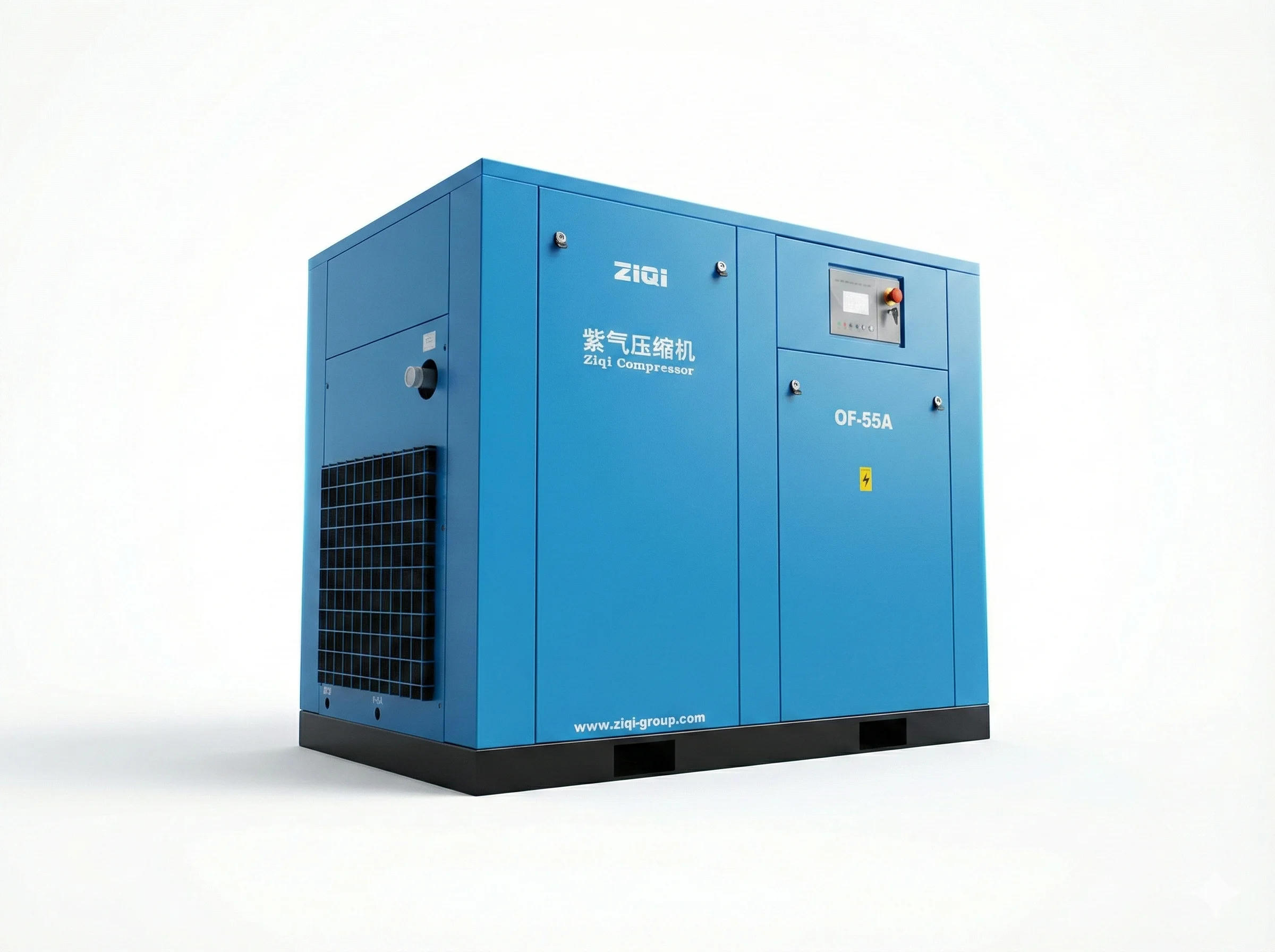
Understanding the internal mechanics is key to making the right choice.
In these systems, oil is injected directly into the compression chamber. This oil serves three critical functions:
Result: The compressed air contains oil residue and must pass through oil separators and filters.
These machines use advanced German-engineered timing gears to ensure the male and female rotors never touch. Since there is no contact, no lubricant is needed inside the chamber.
Result: The air delivered is 100% free of oil contaminants.
| Feature | Oil-Free (Dry Screw) | Oil-Flooded (Injected) |
|---|---|---|
| Air Purity | ISO Class 0 (100% Pure) | ISO Class 1-4 (Risk of Carryover) |
| Compression Chamber | Completely Dry (No Oil) | Filled with Oil Mist |
| Filtration Needs | Minimal (Dust only) | High (Oil Separators, Line Filters) |
| Maintenance Cost | Low (No oil changes needed) | High (Frequent oil/filter changes) |
| Capital Cost | Higher Initial Investment | Lower Initial Investment |
| Lifespan | Long (Precision German Tech) | Moderate |
You operate in industries where air quality is non-negotiable. Any trace of oil could ruin your product, damage sensitive equipment, or violate health regulations.
You need a cost-effective solution for general industrial power tools where minor oil contamination is acceptable or can be managed with filters.
Technically, no. While high-quality filters can remove most oil (down to 0.003 mg/m³), they cannot guarantee Class 0 purity. Filters can fail, become saturated, or break, leading to sudden contamination. Only a true oil-free compressor guarantees zero risk.
Contrary to belief, daily maintenance is simpler because there is no oil to check or change. However, the major overhaul (air end service) requires specialized technicians familiar with German precision engineering.
Still unsure which technology fits your production line? Talk to our experts to get a detailed air demand analysis.