A VSD (Variable Speed Drive) air compressor saves energy by automatically adjusting motor speed to match real-time demand for compressed air, reducing idle running, lowering power consumption, and improving system efficiency compared with fixed speed compressors that operate continuously at full speed.
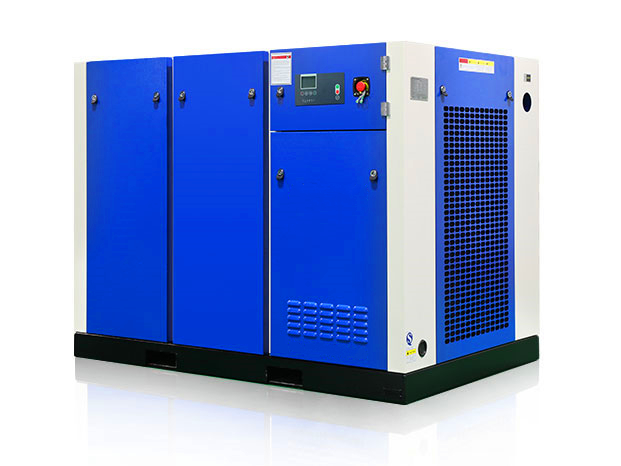
A variable speed air compressor uses variable speed drive (VSD) technology to control the motor speed of rotary screw compressors. Instead of running at a constant speed, the compressor adjusts its output based on the required amount of compressed air.
This dynamic control makes VSD compressors more energy efficient than traditional fixed speed compressors, especially in applications with fluctuating air demand.
Fixed speed compressors operate continuously at full speed, regardless of whether compressed air demand is high or low.
When demand decreases, these systems still run at full capacity, often venting excess air or cycling on and off. This leads to:
A VSD compressor automatically adjusts the compressor motor speed to match demand in real time.
This eliminates unnecessary energy use and stabilizes pressure.
In compressed air systems, flow rate and power consumption are directly related.
VSD technology ensures power usage matches actual air consumption, avoiding wasted electricity during partial load conditions.
Fixed speed compressors often run unloaded while still consuming power.
VSD air compressors reduce idle time, lowering overall energy consumption.
Applications with fluctuating compressed air usage—such as manufacturing, food processing, and packaging—benefit the most.
Many facilities report significant energy savings, often ranging from 20% to 50% compared with fixed speed systems.
| Feature | VSD Compressors | Fixed Speed Compressors |
|---|---|---|
| Speed Control | Variable | Constant |
| Response to Demand | Real-time adjustment | On/off cycling |
| Energy Consumption | Lower | Higher |
| Pressure Stability | Stable | Fluctuates |
| Operational Costs | Reduced | Higher |
The demand for compressed air rarely stays constant in industrial environments. Production lines, pneumatic tools, and process equipment often operate intermittently.
A VSD compressor adapts output to the amount of compressed air required, preventing overproduction and unnecessary power use.
A professional air audit evaluates:
This data helps determine whether a VSD compressor will provide measurable savings and how to size the system correctly.
Energy costs represent the largest share of compressor lifecycle expenses. By lowering electricity usage, VSD compressors:
VSD compressors are widely used in:
These sectors benefit from variable demand patterns and stable compressed air supply.
VSD compressors adjust motor speed to match air demand, while fixed speed compressors run continuously at full speed, leading to higher energy use during partial load conditions.
Energy savings typically range from 20% to 50%, depending on demand variability, system design, and operating hours.
If a system operates continuously at full speed with constant demand, fixed speed compressors may be more cost-effective. VSD compressors show the greatest savings when demand fluctuates.
VSD technology mainly affects energy efficiency and pressure stability. Air quality depends on filtration, dryers, and system design.
Yes. A professional air audit ensures proper sizing and confirms potential energy savings before investing in VSD technology.
Initial costs are higher, but lower energy consumption and reduced operational costs often deliver a fast return on investment.
A VSD air compressor saves energy by matching output to real-time demand, reducing idle running, stabilizing pressure, and lowering power consumption across the compressed air system. For facilities with variable demand patterns, VSD compressors offer measurable efficiency improvements and lower lifecycle costs.