Selecting the right air compressors for a factory is an important investment. The right equipment helps maintain stable production, reduce operating costs, and deliver reliable compressed air for daily operations.
Among the many compressor types available today, oil injected rotary screw compressors are one of the most popular choices for industrial users. They combine continuous airflow, dependable performance, and good energy efficiency, making them suitable for a wide range of manufacturing environments.
This guide explains how an oil injected rotary screw compressor works, its advantages, how to choose the right model, and which industries benefit most from this technology.
An oil injected rotary screw compressor compresses air using two interlocking rotors while injecting lubricating oil into the compression chamber. The oil cools, seals, and lubricates the airend, helping the compressor works efficiently during continuous operation. These compressors are widely used in general manufacturing, manufacturing automotive, metal fabrication, plastics, packaging, and many other industrial applications.
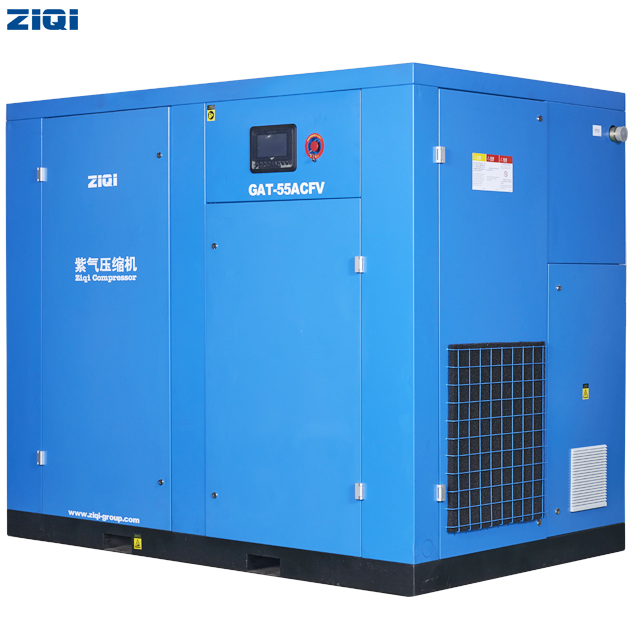
A rotary screw air compressor uses two precisely machined rotors that rotate together inside an airend.
As air enters the compression chamber, lubricating oil is injected into the compression process. The oil performs several functions:
Because of this design, oil injected rotary screw compressors are also known as oil flooded screw compressors or oil lubricated screw compressors.
Understanding how the compressor works helps buyers compare different compressor technologies.
The process includes the following steps:
This design allows the compressor to operate continuously while maintaining stable airflow.
Many buyers compare oil injected rotary screw compressors with oil free compressors.
Both have advantages depending on the application.
| Oil-Injected Compressor | Oil-Free Compressor |
|---|---|
| Lower purchase cost | Clean compressed air with no oil in the compression chamber |
| High efficiency | Suitable for sensitive industries |
| Continuous operation | Meets strict air purity requirements |
| Lower maintenance cost | Higher initial investment |
For general manufacturing, oil-injected compressors are often the preferred solution.
An oil free compressor is usually selected for industries where compressed air comes into direct contact with products.
Modern screw compressors are designed for high energy efficiency, reducing electricity consumption over long operating hours.
Many models also include variable speed drive technology to further reduce energy use.
Unlike many piston compressors, rotary screw compressors are designed for continuous operation.
This makes them suitable for factories running multiple production shifts every day.
Factories need consistent airflow and pressure.
A rotary screw compressor delivers steady compressed air for production equipment, helping reduce pressure fluctuations.
With proper maintenance and quality components, oil lubricated screw compressors provide reliable performance for many years.
Many modern compressors are available with variable speed drive (VSD) technology.
Instead of operating at one fixed speed, the motor automatically adjusts output according to air demand.
Advantages include:
Factories with changing production schedules often benefit from VSD compressors.
Facilities with stable airflow requirements may prefer fixed-speed models.
Oil-injected screw compressors support a wide range of industries.
Typical industrial applications include:
Powering assembly lines, pneumatic tools, packaging equipment, and production machinery.
Compressed air is widely used for robotic assembly, painting, fastening systems, and automated production.
Supporting CNC machining centers, laser cutting equipment, and pneumatic tools.
Providing compressed air for injection molding and material handling.
Operating weaving machines and production automation.
Many food and beverage factories use compressed air throughout production.
When compressed air comes into contact with food products, an oil free compressor is usually recommended. For utility air that does not contact products, oil-injected compressors may still be suitable when combined with proper filtration and air treatment.
Every compressed air system should provide suitable air quality for its application.
Poor air quality may cause:
Proper air treatment typically includes:
Selecting the correct treatment equipment helps maintain high quality compressed air throughout the system.
When selecting an oil-injected screw compressor, consider:
A properly sized compressor delivers better performance than simply purchasing the largest available model.
Many global manufacturers supply rotary screw compressors.
For example, Atlas Copco is well known for its compressed air technologies and offers a broad range of industrial compressor solutions.
When evaluating suppliers, compare:
The best supplier is the one that can provide equipment and support that matches your factory's operating requirements.
Routine maintenance helps extend compressor life and maintain performance.
Recommended maintenance includes:
Preventive maintenance also supports better energy efficiency over the long term.
An oil injected rotary screw compressor compresses air using two rotating screw rotors while injecting lubricating oil into the compression chamber to cool, seal, and lubricate the compression process.
Oil-injected compressors use lubricating oil during compression, while oil free compressors compress air without oil entering the compression chamber. Oil-free models are preferred when extremely clean compressed air is required.
For continuous industrial production, rotary screw air compressor systems generally provide more stable airflow, lower noise, and higher efficiency than many piston compressors. Piston compressors remain suitable for intermittent or smaller applications.
A variable speed drive compressor is recommended when air demand changes throughout the day because it automatically adjusts motor speed to match production requirements.
Yes. Many food and beverage facilities use oil-injected compressors for utility air. However, if compressed air directly contacts products, an oil free compressor is generally recommended to meet air quality requirements.
Consider airflow requirements, operating pressure, production hours, air quality standards, future expansion, maintenance needs, and total operating costs rather than purchase price alone.
An oil injected rotary screw compressor remains one of the most practical solutions for factories requiring reliable compressed air every day. Its continuous operation, stable airflow, long service life, and strong energy efficiency make it suitable for a wide range of industrial applications, including general manufacturing, manufacturing automotive, metal processing, plastics, and many other industries.
By selecting the correct compressor size, choosing appropriate air treatment equipment, and understanding your factory's air quality requirements, you can build compressed air systems that deliver dependable performance and long-term value.