Compressed air is widely used in modern industry for powering tools, automation systems, and production lines. Among different compressor technologies, rotary screw air compressors are widely adopted in factories due to their continuous operation, energy efficiency, and reliability.
This article explains what a screw air compressor is, how it works, how it compares with piston compressors, and how technologies like variable speed drive help reduce operational costs.
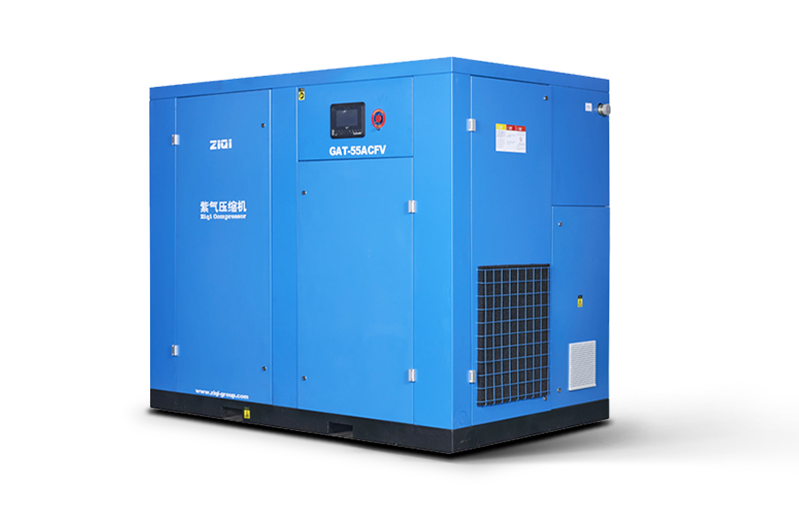
A screw air compressor is a type of positive displacement compressor that uses two interlocking helical rotors to compress air. As the rotors rotate, air is trapped between the rotor lobes and the housing, then compressed as the volume decreases.
Screw compressors are designed for continuous industrial use and deliver a steady flow of compressed air without pulsation.
Rotary screw air compressors operate using two precision-machined rotors:
Air enters through the inlet valve and is trapped between the rotors. As the rotors turn, the trapped air volume decreases, increasing pressure. The compressed air is then discharged into the compressed air system or storage tank.
Oil-injected screw compressors use oil for lubrication, sealing, and cooling. These models are widely used in manufacturing, automotive, and heavy industries due to their efficiency and durability.
Oil-free screw compressors use special coatings and precision engineering to prevent oil contact with compressed air. They are used in industries where air purity is required, such as food, pharmaceutical, and electronics manufacturing.
A variable speed drive (VSD) screw compressor adjusts motor speed according to air demand. Instead of operating at constant speed, the compressor automatically changes output to match real-time consumption.
Screw compressors are designed for continuous operation in industrial environments.
Advanced rotor profiles and variable speed drive systems help improve efficiency and reduce electricity consumption.
Fewer moving parts result in reduced wear and longer maintenance intervals.
Screw compressors are used across a wide range of industries, including:
Screw air compressors are commonly used for:
While screw compressors usually require a higher initial investment compared to piston compressors, they often offer lower operational costs over time.
Savings come from:
Many industrial users further reduce compressed air costs with intelligent control systems and heat recovery solutions.
When selecting a screw air compressor, consider:
Screw air compressors are used in industrial applications that require continuous and stable compressed air supply, such as manufacturing, automation, and processing industries.
Screw compressors provide continuous airflow and are suitable for heavy-duty applications, while piston compressors operate intermittently and are better suited for small workshops.
Variable speed drive compressors help reduce energy consumption and improve system efficiency, making them suitable for factories with fluctuating air demand.
Operational costs depend on energy consumption, maintenance intervals, spare parts, system design, and operating hours.
With proper maintenance, screw air compressors can operate for many years and tens of thousands of running hours.
Screw air compressors are widely used in industrial compressed air systems due to their continuous operation, energy efficiency, and adaptability. With advanced rotor designs and variable speed drive technology, modern screw compressors provide reliable compressed air while helping reduce operational costs across industrial applications.