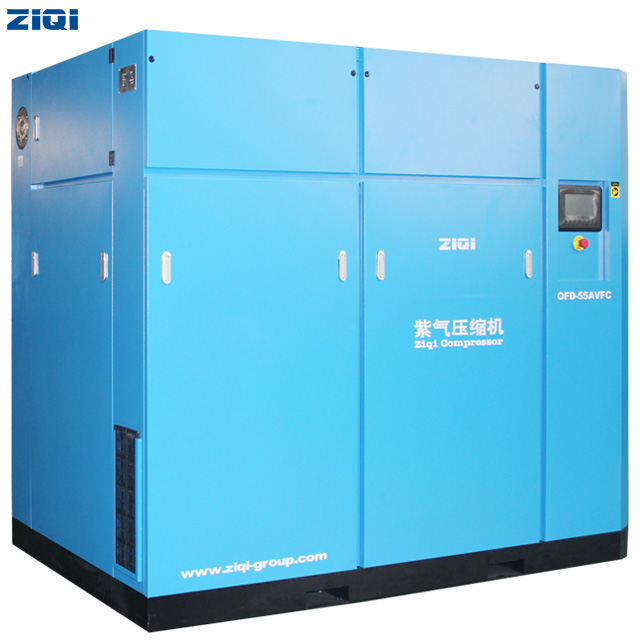
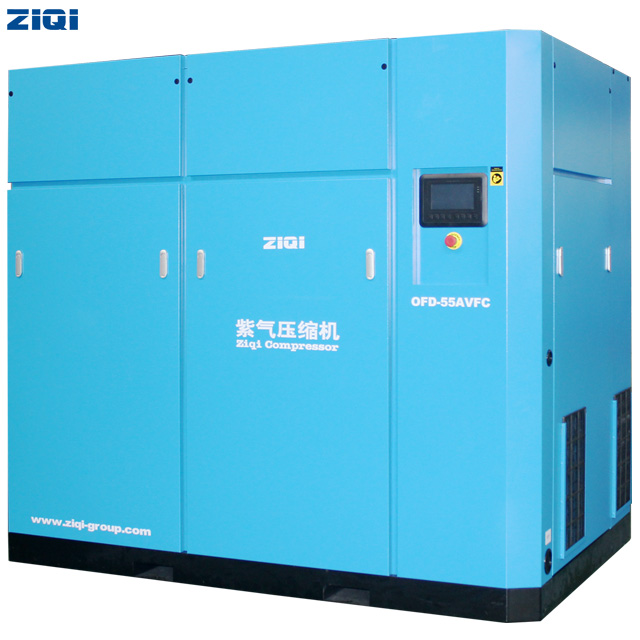
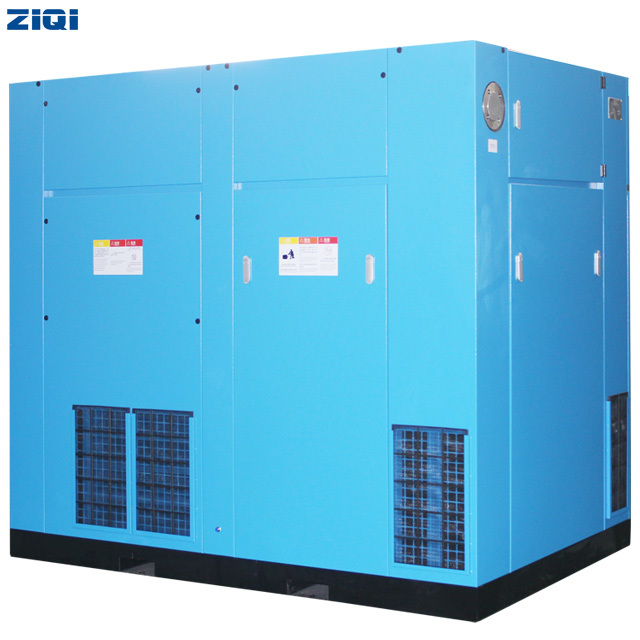
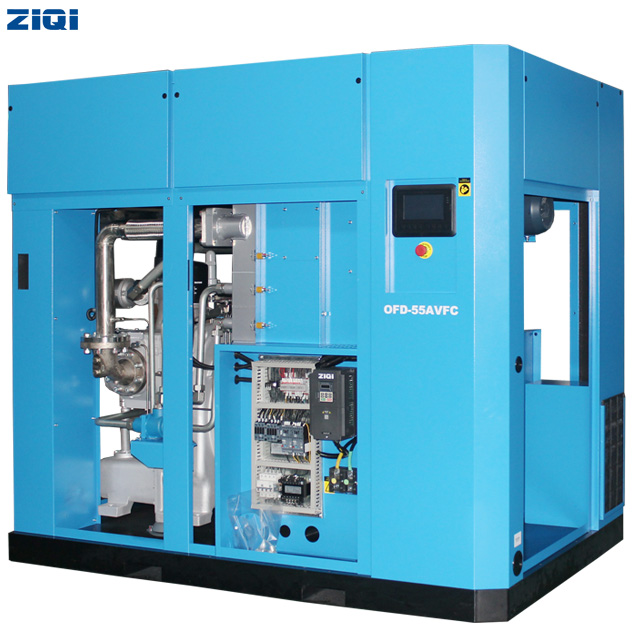
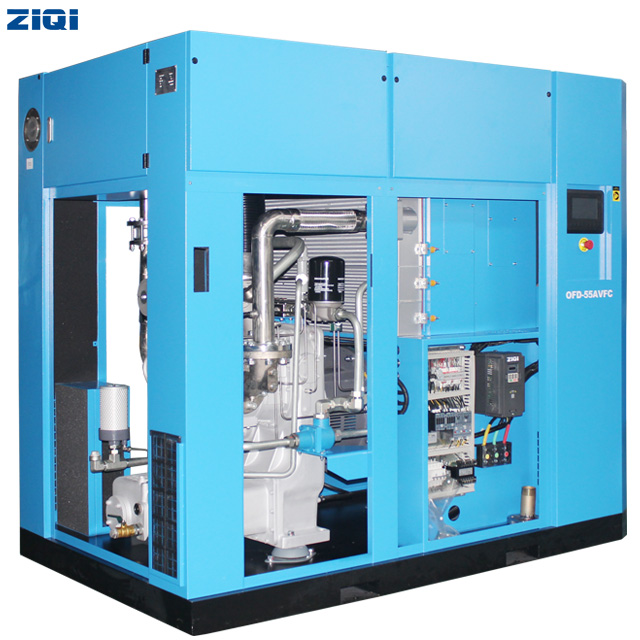
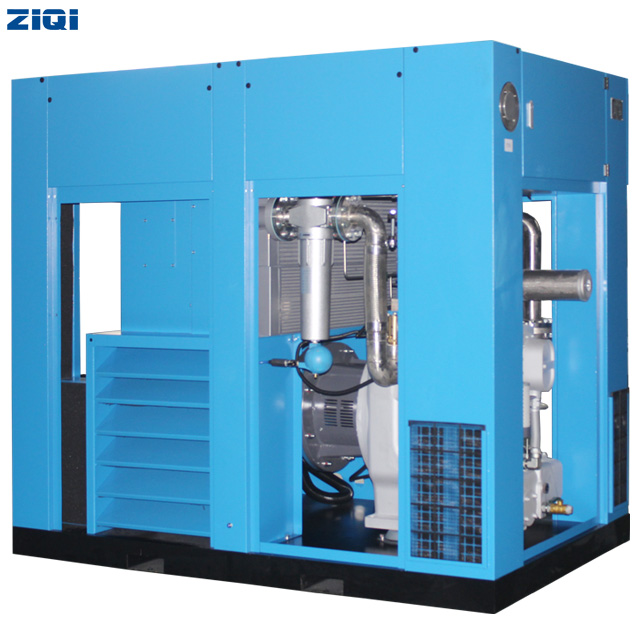
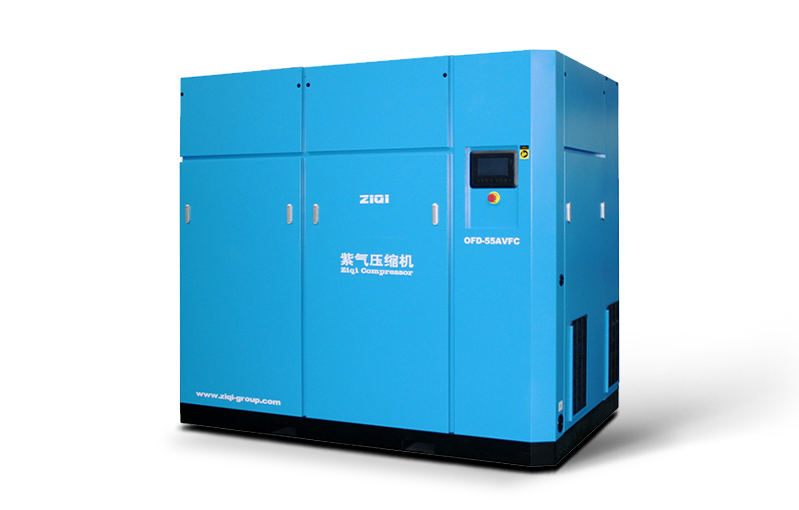
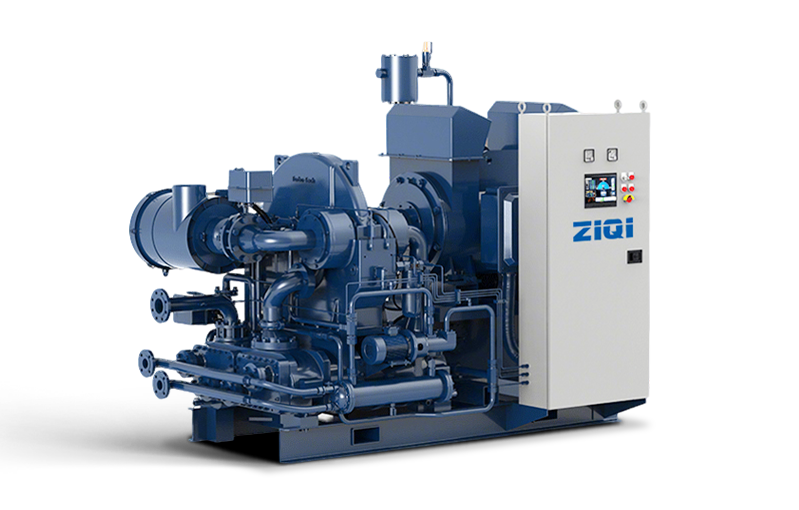
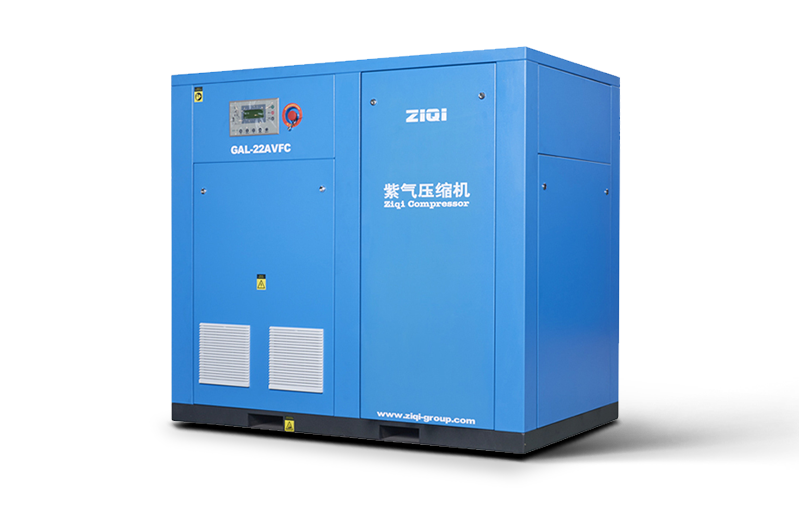
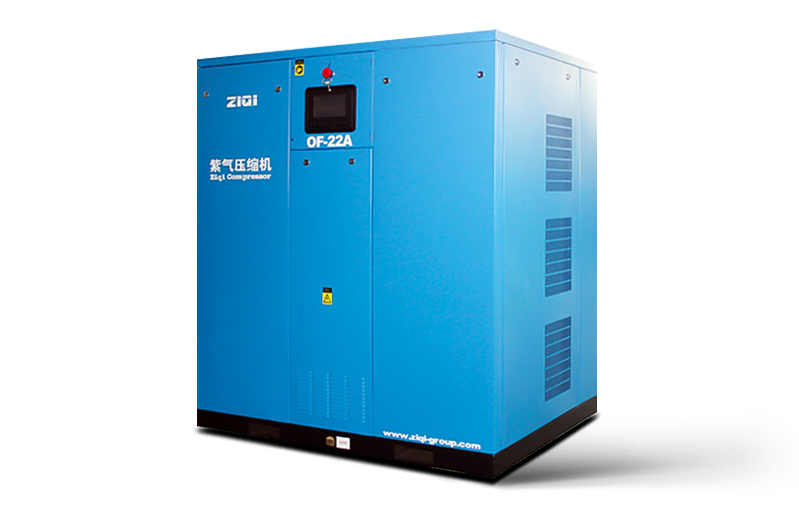
Why ZIQI OFD Dry Oil-Free is the Safest Choice
In industries like Pharmaceuticals, Food & Beverage, Electronics,
and Chemical Processing, even a trace of oil can ruin an entire
production batch or compromise product safety. The ZIQI OFD
Series uses a dry compression chamber where no oil is
injected. Combined with non-contact labyrinth seals, we
guarantee ISO 8573-1 Class 0 air purity — the highest
standard in the industry.
With 14 models from 45 to 355 kW, the OFD series covers
everything from small pharmaceutical cleanrooms to large-scale semiconductor
fabs. Air-cooled models (45–185 kW) offer simple installation, while
water-cooled models (200–355 kW) handle high-capacity industrial demands.
For water-lubricated oil-free technology with even lower noise, see our OFW
series. For oil-free scroll compressors for smaller applications,
see our OF
scroll series.
⚙️
Stainless Steel 2nd Stage
High-pressure stage rotors are made of stainless steel to prevent rust in
humid environments — ensuring air purity and extending air end lifespan
even in tropical climates.
❄️
Dual Cooling Options
Air-cooled models (45–185 kW) for simple installation. Water-cooled
models (200–355 kW) for high-capacity installations with lower discharge
temperatures in hot environments.
🔇
Industrial Noise Control
Fully enclosed soundproof canopy with vibration-dampened mounts.
Air-cooled models: 80–82 dB(A). Water-cooled models: 85–90 dB(A).
Suitable for factory floor installation.
💊
Pharmaceutical & Medical
GMP/FDA-compliant facilities requiring Class 0 oil-free air for tablet
coating, capsule filling, API processing, and medical breathing air.
Zero risk of oil contamination.
🍕
Food & Beverage
Direct-contact compressed air for food packaging, bottle blowing, dairy
processing, and fermentation. Clean condensate can be directly
discharged without oil-water treatment.
🔬
Electronics & Semiconductor
Ultra-clean air for wafer fabrication, PCB assembly, and cleanroom
environments. Even microscopic oil particles cause defects in
semiconductor processes.
🧪
Chemical & Textile
Chemical processing, textile dyeing, and surface treatment where oil
contamination affects product quality. The OFD handles corrosive
environments with stainless steel rotors.
1
Confirm Oil-Free Requirement
Verify that your application requires ISO 8573-1 Class 0 oil-free air.
Pharma, food, electronics, and medical typically mandate this. If Class
1–2 is acceptable, consider our OFW water-lubricated series.
2
Calculate Air Demand
The OFD offers 3 pressure options: 0.7, 0.8, and 1.0 MPa. Flow ranges
from 6.4 m³/min (45 kW) to 58.5 m³/min (355 kW). Add 20% margin for peak
demand and future expansion.
3
Choose Air or Water-Cooled
Air-cooled (OFD-45A to 185A) is simpler to install with no water circuit.
Water-cooled (OFD-200W to 355W) is required above 185 kW and offers
lower discharge temperatures in hot environments.
OFD Water-Cooled Series — 200 to 355 kW
Water-Cooled · Class 0
* All OFD models are two-stage dry screw compression
with Ultracoat rotors and stainless steel 2nd stage. "A" = Air-Cooled, "W" =
Water-Cooled. All data verified against master spec sheet. Contact our engineers for
exact configuration and pricing.
What does ISO 8573-1 Class 0 mean?
Class 0 is the most stringent air quality standard
under ISO 8573-1. It guarantees 100% oil-free air with zero risk of
contamination — essential for food, pharmaceutical, electronics, and
chemical manufacturing where even trace oil can ruin products or pose
safety risks. It is stricter than Class 1, which allows trace amounts of
oil.
Why use stainless steel rotors in the 2nd stage?
In dry compression without oil lubrication, humidity
in the intake air can cause corrosion on standard carbon steel rotors.
ZIQI uses stainless steel for the 2nd stage (high-pressure) rotors to
prevent rust, ensuring air purity and extending air end lifespan even in
humid tropical environments or applications with high moisture content
in the inlet air.
What is Ultracoat technology?
Ultracoat is a proprietary rotor coating made of
Teflon (PTFE) and Molybdenum Disulfide (MoS₂). It provides dry
lubrication between rotors without oil, reduces internal leakage for
higher compression efficiency, resists high temperatures generated
during compression, and is designed to last the lifetime of the machine.
Do dry oil-free compressors need oil separator
filters?
No. Since no oil enters the compression chamber,
there is no need for oil separators, oil filters, or coalescent filters.
This eliminates pressure drop across filters (saving energy), reduces
maintenance costs significantly, and produces clean condensate that can
be directly discharged without oil-water treatment equipment.
How does dry oil-free compare to water-lubricated
oil-free?
Dry oil-free (OFD) uses no liquid in the compression
chamber — only coated rotors with tight clearances. Water-lubricated
(OFW) injects purified water for sealing and cooling. OFD is better for
high-temperature environments and applications requiring zero liquid
contact. OFW is quieter and often more energy-efficient but requires
water treatment. Both achieve Class 0 oil-free air quality.
What is the maintenance interval for dry screw
compressors?
Air end coating and bearings typically require
inspection at 40,000–60,000 hours. Air intake filters should be changed
every 2,000–4,000 hours depending on environment. Since there is no oil
circuit, there are no oil changes, no oil filters, and no separator
elements — significantly reducing routine maintenance compared to
oil-injected compressors.
Can the OFD series work in tropical or high-humidity
environments?
Yes. The stainless steel 2nd stage rotors and
Ultracoat coating are specifically designed for corrosion resistance in
humid conditions. Air-cooled models work well in most environments. For
ambient temperatures above 40°C or very high humidity, water-cooled
models (200–355 kW) provide better heat dissipation.
What industries typically use dry oil-free
compressors?
Primary industries include pharmaceutical
manufacturing (GMP/FDA compliance), food and beverage processing
(HACCP), semiconductor and electronics fabrication, chemical processing,
textile manufacturing, hospital and medical air systems, and any
application where oil contamination poses product quality, safety, or
regulatory risks.