High-pressure compressed air is required in many industries where standard air compressors cannot provide enough pressure. Applications such as PET bottle blowing, pressure testing, gas storage, diving, and power generation often need air pressures far above those used in general manufacturing.
A high pressure piston air compressor, also called a reciprocating air compressor, is designed to produce compressed air at much higher pressures while maintaining reliable performance. Thanks to its simple structure, compact design, and ability to generate high pressure, it remains one of the most widely used compressor types in industrial and commercial applications.
In this guide, you'll learn how a high-pressure piston compressor works, its main compressors parts, common applications, maintenance tips, and how to choose the right model.
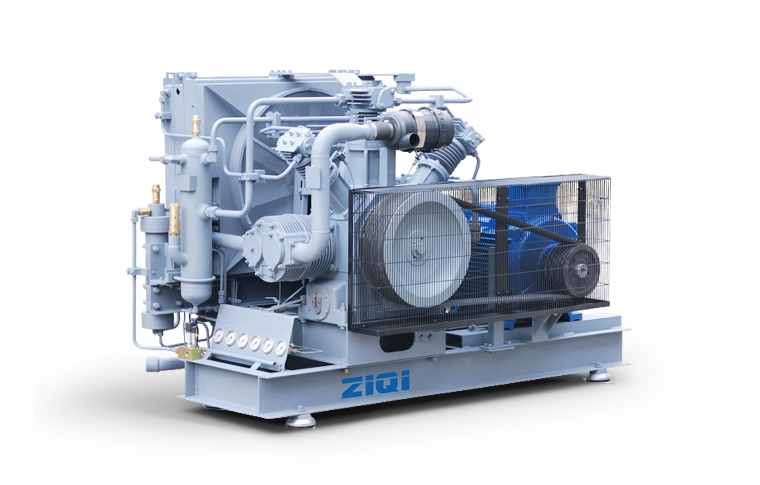
A high pressure piston air compressor is a type of reciprocating air compressor that compresses air using one or more reciprocating piston assemblies moving inside cylinders. As the piston moves up and down, it draws in air, compresses it, and delivers it at much higher pressure than many standard compressors.
These compressors are commonly used when air pressures above 30 bar (435 psi) are required, with some models capable of reaching 350 bar (5,000 psi) or more.
A reciprocating air compressor operates through a repeating compression cycle.
The process includes four basic steps:
This simple operating principle allows piston compressors to generate very high pressure with excellent reliability.
Understanding the main compressors parts helps users operate and maintain the equipment more effectively.
Typical components include:
The cylinder forms the compression chamber where air pressure is increased.
The reciprocating piston moves continuously inside the cylinder to compress air.
The crankshaft converts the motor's rotary motion into the up-and-down movement required by the piston.
The connecting rod links the piston to the crankshaft.
These valves control airflow during each compression cycle.
Because compression generates heat, cooling fans or intercoolers help lower operating temperatures and keep the compressor running efficiently.
The motor supplies the power needed for continuous compression.
Several types of piston air compressors are available depending on application requirements.
These compressors compress air once before discharge.
They are suitable for medium-pressure industrial work.
Air is compressed twice through separate cylinders.
Two-stage models provide higher efficiency and are commonly selected for continuous high pressure applications.
Lubricating oil reduces friction between moving parts and extends service life.
These models are common in general industrial production.
An oil free piston compressor does not allow lubricating oil to contact the compressed air.
This makes it suitable for industries requiring clean air, including:
High-pressure piston compressors continue to be popular because they offer several practical benefits.
Their greatest advantage is the ability to generate very high discharge pressure for demanding industrial processes.
Many models feature a compact design, making installation easier where floor space is limited.
Most compressors parts are easy to inspect and replace, helping reduce service time.
With proper maintenance, reciprocating compressors can provide many years of dependable operation.
Compared with some other high-pressure technologies, piston compressors often have lower purchase costs.
High-pressure piston compressors are used across many industries.
Typical industrial applications include:
Different industries require different air pressures, flow rates, and air quality standards. Choosing equipment that matches your operating conditions is always the best approach.
Regular maintenance not only extends equipment life but also improves efficiency and reduces operating costs.
Recommended maintenance includes:
Keeping compressors running under proper operating conditions reduces wear and helps maintain stable pressure output.
Both compressor types have advantages.
Advantages:
Advantages:
An oil free compressor is often the ideal suite for industries with strict air purity requirements.
When selecting a compressor, consider the following factors:
For continuous operation, compare both piston and rotary screw technologies before making a decision.
A high pressure piston air compressor is a reciprocating air compressor that uses one or more pistons to compress air to high pressure for industrial and commercial applications.
Piston air compressors compress air using a reciprocating piston inside a cylinder, while rotary screw compressors use two interlocking rotors to produce continuous airflow.
Piston compressors are often preferred for intermittent operation and high-pressure applications.
Reciprocating compressors are widely used in PET bottle manufacturing, chemical plants, oil and gas, laboratories, medical facilities, diving systems, and pressure testing.
It depends on the application.
An oil free compressor is the best choice when clean compressed air is required. Oil-lubricated models are suitable for many general industrial processes.
Regular maintenance, clean air filters, proper lubrication, leak inspection, and replacing worn compressors parts all help improve performance and improves efficiency over the long term.
With proper maintenance and correct operating conditions, many piston air compressors can operate reliably for more than 15 years.
A high pressure piston air compressor is a reliable solution for applications that require stable high pressure and dependable performance. Using a simple reciprocating piston mechanism, these compressors can deliver compressed air for a wide range of industries, from manufacturing and energy to medical and laboratory environments.
Whether you choose an oil-lubricated or oil free model, selecting the right equipment, maintaining the main compressors parts, and keeping your compressors running under proper operating conditions will improve system reliability, extend service life, and support efficient production.