Heavy Industrial · Multi-Stage Piston · 30 – 400 Bar
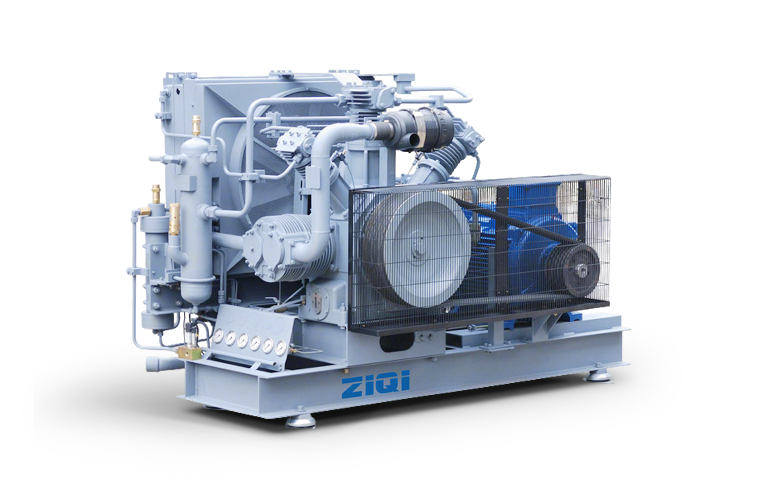
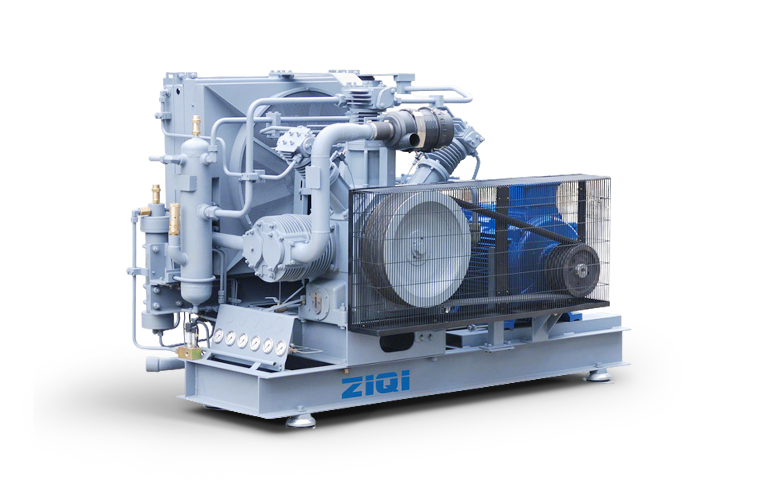
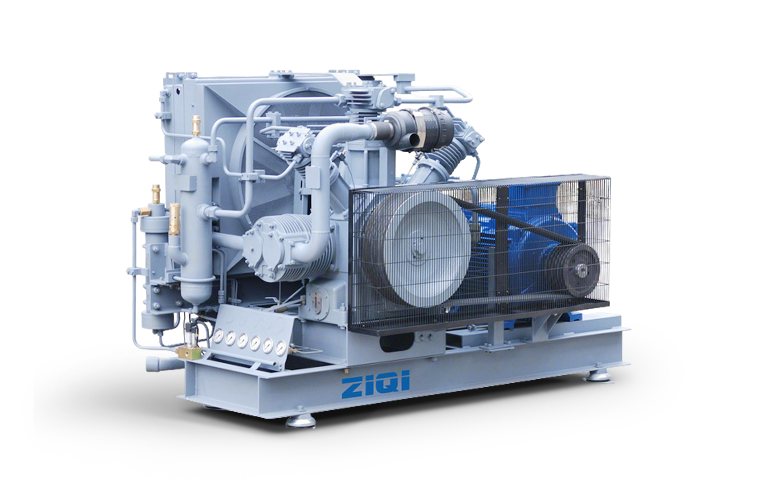
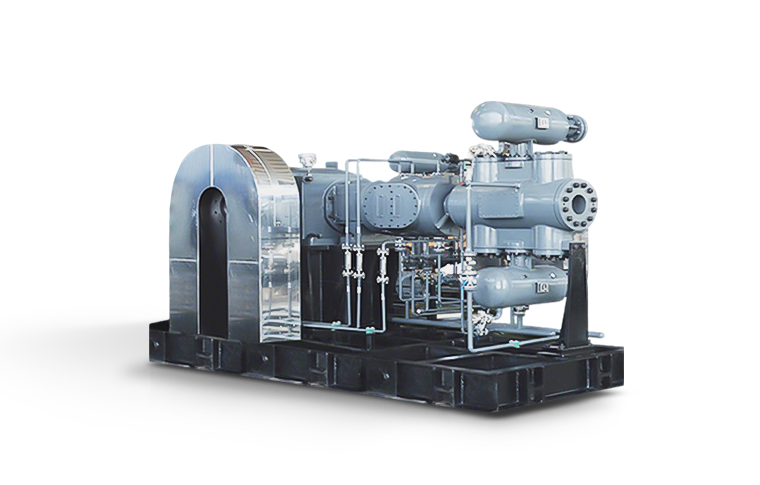
HQ High Pressure Piston Compressor
When screw compressors can't reach the pressure. 33 models from 30 to 400
bar, 2-5 stage compression, forced oil pump lubrication. Built for PET
blowing, pipeline testing, and hydropower.
When Do You Need a Piston Booster Instead of a Screw?
Screw compressors are ideal up to 30 bar — our GAH
series handles that range with PM VSD efficiency. But when your
application demands 50, 100, 250, or even 400 bar, physics
requires multi-stage reciprocating compression. That's the ZIQI HQ's
territory.
Most piston compressors on the market use splash lubrication
— oil is merely flung by the crankshaft and hopes to reach every bearing.
The ZIQI HQ uses forced oil pump lubrication from the first
second of startup, delivering pressurized oil to every moving surface. This
single difference extends valve and ring life by 40-60%, directly reducing
your maintenance cost and downtime.
Lubrication
⚙️
Forced Oil Pump System
Active oil pump delivers pressurized lubricant to every bearing,
crosshead, and cylinder wall from the first rotation. Unlike splash
systems that fail at startup and under heavy load, forced lubrication
ensures zero dry friction — extending valve life to 3,000+ hours and
reducing unplanned downtime.
-
Startup: Full lubrication from second one (no
dry start)
-
Monitoring: Real-time oil pressure gauge with
low-pressure shutdown
-
Filtration: High-grade precision oil filter
prevents particle damage
Cooling
❄️
Deep-Fin Cylinder + Dual Coolers
Temperature is the #1 enemy of high-pressure piston compressors. ZIQI
uses deep-fin cast cylinders with 40% more surface area than standard
designs, plus dedicated inter-stage and after-coolers. A
main-shaft-driven fan creates powerful forced airflow — no separate
cooling motor needed.
-
Cylinders: Deep-fin design for maximum heat
dissipation
-
Inter-stage: Dedicated cooler between every
compression stage
-
After-cooler: Reduces final discharge
temperature for downstream safety
🔩
Premium Valve Alloys
High-strength alloy valve plates and seat rings optimized for varying
pressures and temperatures. Designed for 3,000+ hour service life — 50%
longer than standard cast-iron valves found in commodity machines.
💧
Auto Inter-Stage Drainage
Automatic condensate drain between every compression stage prevents water
accumulation that corrodes valves and contaminates downstream air. Most
competitors rely on manual drain — easy to forget, costly to ignore.
🛠️
Skid or Soundproof
Available as skid-mounted base for easy relocation
between job sites, or in a soundproof enclosure for
noise-sensitive environments. Both configurations use the same
heavy-duty internals.
30-50 Bar
PET Bottle Blowing
Stretch blow molding machines need 30-40 bar of clean, dry air. The HQ
provides stable high-pressure supply for continuous production lines.
Models: HQ3-30 to HQ10-50
30-50 Bar
Laser Cutting Boost
For laser workshops needing 30+ bar nitrogen assist, the HQ serves as a
reliable booster stage downstream of a GAH screw
compressor.
Models: HQ3-30, HQ5-30
80-150 Bar
Pipeline Pressure Testing
New pipeline installations require hydrostatic testing at 1.25-1.5×
design pressure. The HQ delivers sustained test pressure for 4-24 hour
hold tests.
Models: HQ1.5-100 to HQ8-150
100-250 Bar
Pressure Vessel Testing
Boilers, tanks, and pressure vessels must pass proof testing before
commissioning. The HQ's forced lubrication ensures reliable continuous
output during long test cycles.
Models: HQ1.5-100 to HQ8-250
150-350 Bar
Hydropower Stations
Turbine governor systems and valve actuators need reliable high-pressure
air at 150-250 bar. The HQ's heavy-duty design handles the demanding
duty cycles of power generation.
Models: HQ1.5-150 to HQ7-350
250-400 Bar
Marine & Military
Ship starting air systems, torpedo launch systems, and military
applications requiring 250-400 bar. Available with marine-grade
corrosion protection and classification society approval.
Models: HQ1.5-250 to HQ6-400
* Custom pressure and flow configurations available. Oil-free piston option for
pharmaceutical and food applications. Water cooling available for all models
above 80 bar. Contact our engineers for custom
specifications.
What is a high pressure piston compressor used for?
High pressure piston compressors (30-400 bar) serve PET
bottle blowing, pipeline pressure testing, pressure vessel hydrostatic
testing, CNG refueling stations, hydropower turbine governor systems,
marine starting air, laser cutting boost, and military applications. The
required pressure determines the number of compression stages.
What is the difference between splash lubrication and
forced oil pump?
Splash lubrication relies on the crankshaft flinging oil
upward — it provides zero lubrication at startup and inadequate coverage
under heavy load. Forced oil pump actively delivers pressurized oil to
every bearing, crosshead, and cylinder wall from the first second of
rotation. This extends valve and ring life by 40-60% and prevents the
catastrophic dry-friction failures common in splash-lubricated machines.
How many compression stages do I need?
The number of stages depends on your target pressure.
30-50 bar: 2-3 stages. 80-100 bar: 3-4 stages. 150-250 bar: 4 stages.
250-400 bar: 4-5 stages. Each stage has a compression ratio of about 3:1
to 4:1 with intercooling between stages. Using too few stages creates
excessive heat that rapidly destroys valves and piston rings.
What pressure is needed for PET bottle blowing?
PET stretch blow molding typically needs 30-40 bar.
Standard water bottles require about 30 bar. Large containers or
hot-fill bottles may need 35-40 bar. The air must be clean and dry to
prevent product defects. For pressures up to 30 bar, also consider our
screw-type GAH series which offers 100% duty cycle with lower noise.
Air cooling or water cooling — which should I choose?
Air cooling is simpler — no water supply, no cooling
tower, lower installation cost. It works well for most environments up
to 40°C ambient. Water cooling removes heat more efficiently and is
recommended for continuous duty above 100 bar, ambient temperatures
above 40°C, or installations where space is limited and heat buildup is
a concern.
How often does a high pressure piston compressor need
maintenance?
Valve plates and piston rings need inspection every
2,000-3,000 hours. Oil changes every 500-1,000 hours depending on
operating load. With the ZIQI HQ's forced lubrication and premium alloy
valves, expect 3,000+ hour valve life — roughly 50% longer than
splash-lubricated machines, cutting your annual valve replacement cost
nearly in half.
What is pipeline pressure testing?
Pipeline pressure testing (also called hydrostatic
testing) verifies the structural integrity of new or repaired pipelines
before they carry gas or liquid. Test pressure is typically 1.25-1.5×
the design operating pressure. For example, a 70 bar natural gas
pipeline requires 87-105 bar test pressure, held for 4-24 hours with
monitoring for any pressure drop.
Can this compressor run continuously 24/7?
The ZIQI HQ with forced lubrication and deep-fin cooling
is designed for heavy-duty, extended operation. For true 24/7 non-stop
duty at pressures up to 30 bar, also consider our
GAH screw
series which achieves 100% duty cycle with zero cooling breaks.
For 50+ bar continuous needs, a redundant HQ setup (lead/lag) is the
recommended configuration.
Custom Configuration
Get Your HQ System Quote in 24 Hours
Tell us your target pressure, required air flow, duty
cycle, and application. We'll recommend the exact model, stage count,
cooling type, and structure — plus complete downstream air treatment.