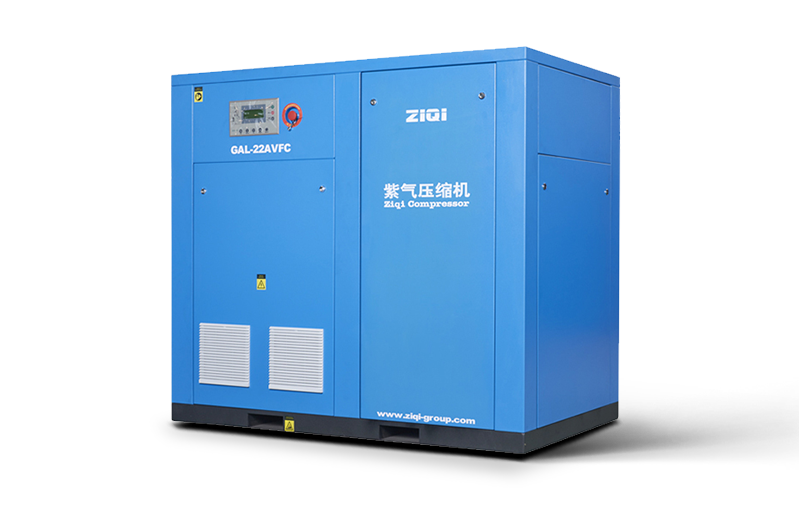
Precision High Pressure · Two-Stage Screw · 15 – 37
kW
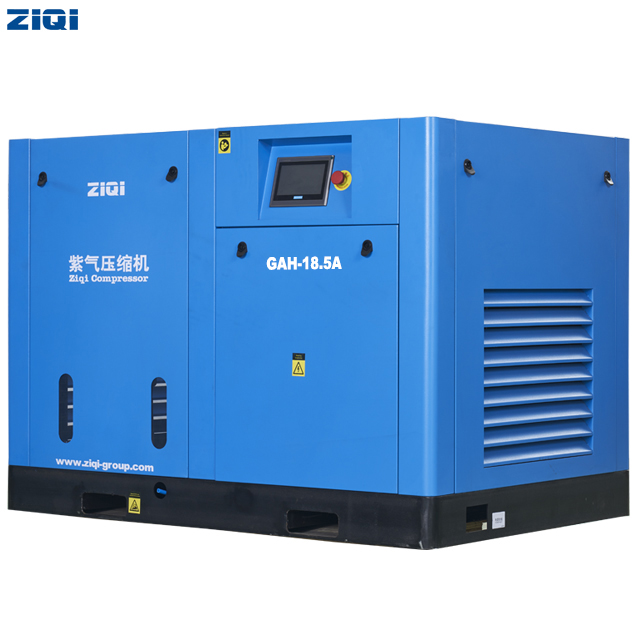
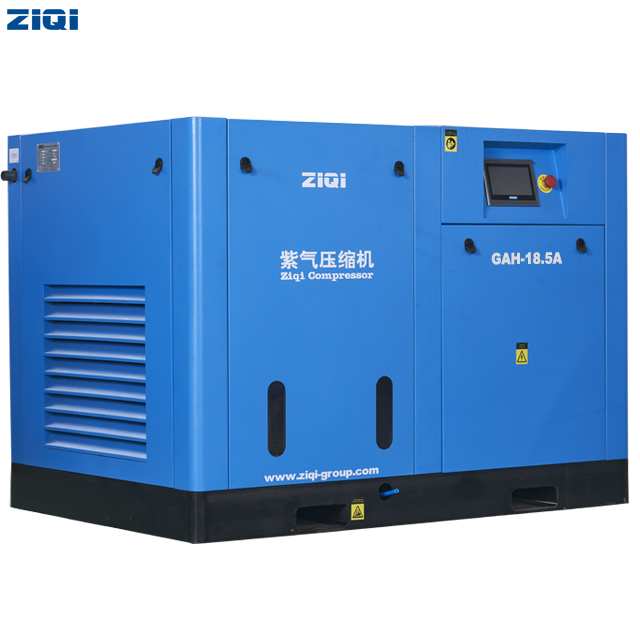
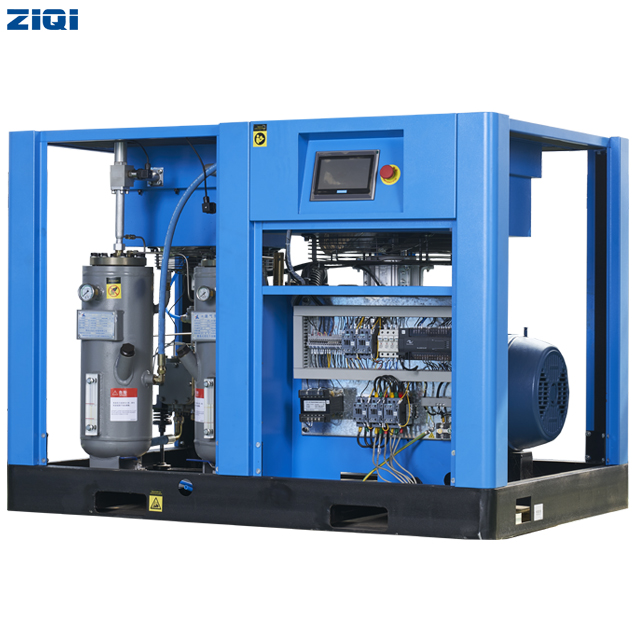
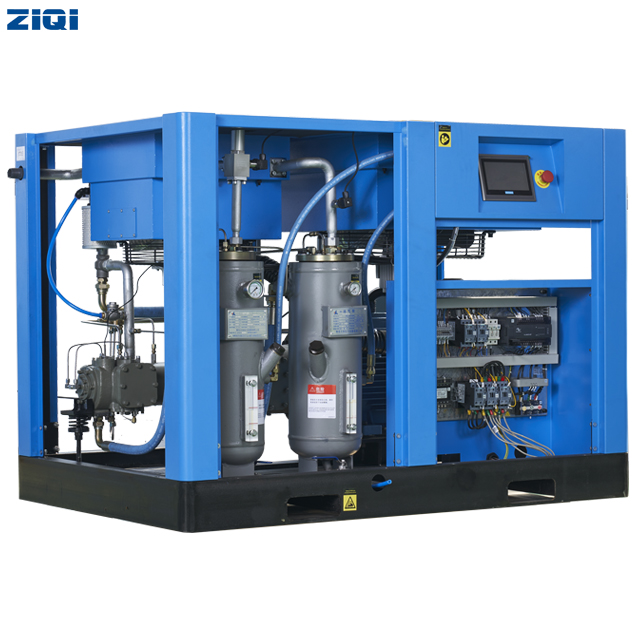
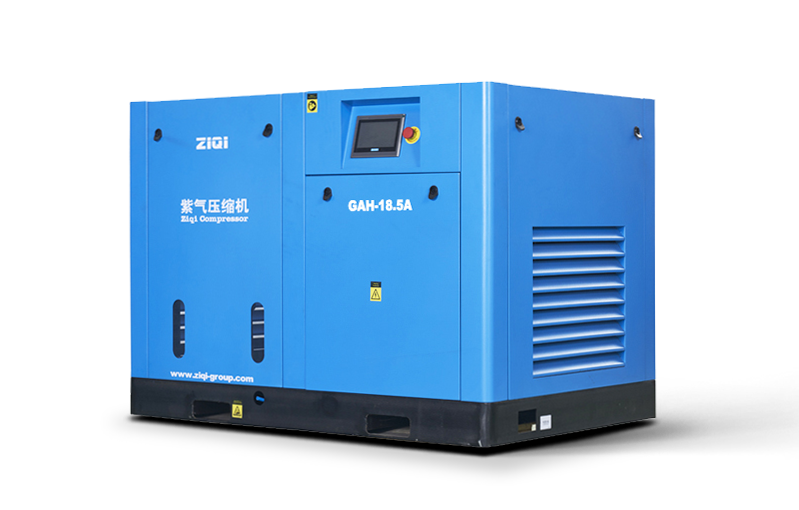
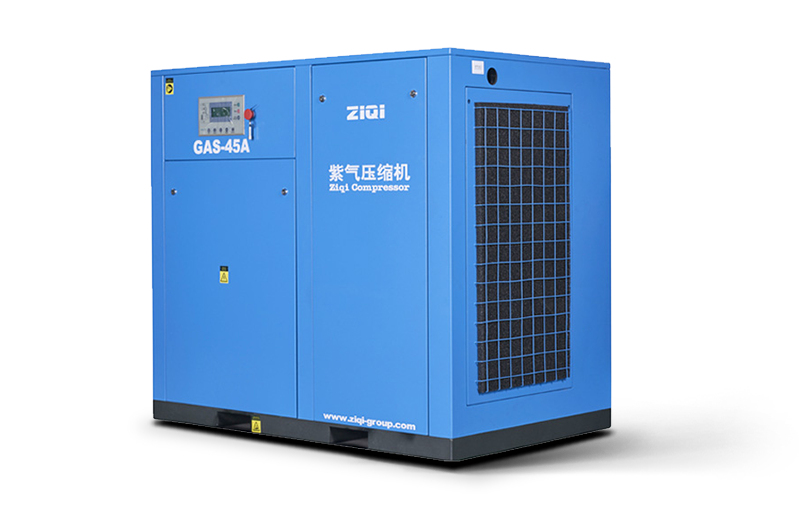
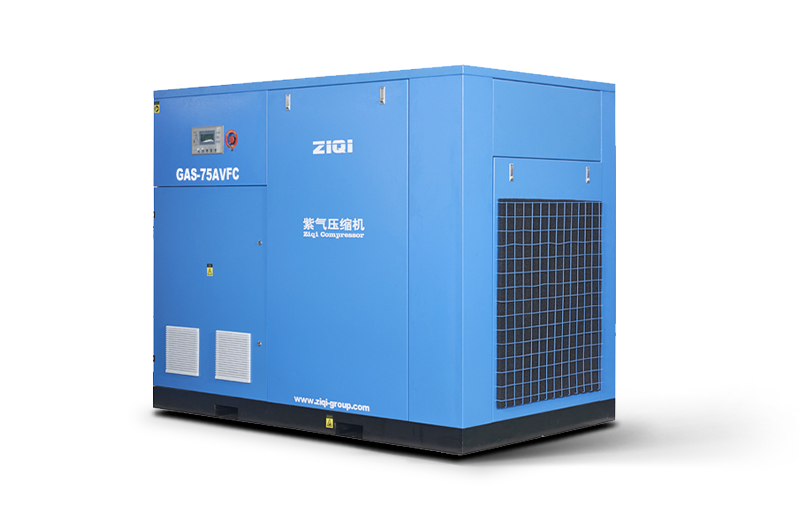
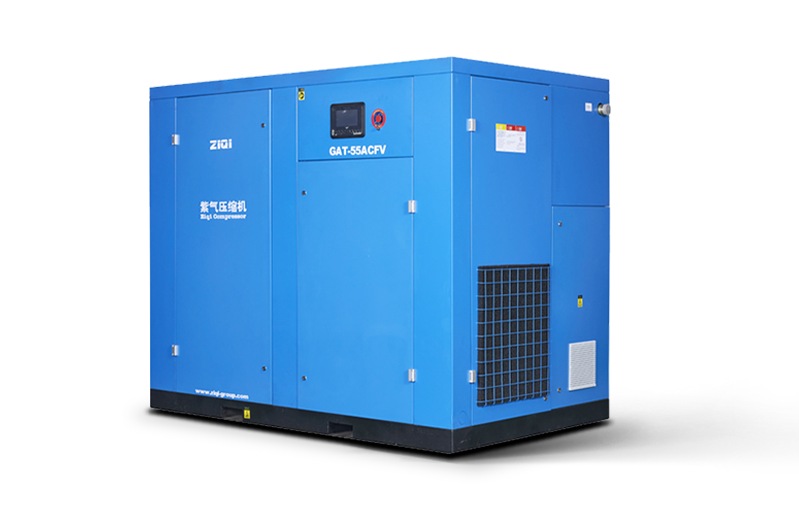
GAH High Pressure Screw Compressor
100% continuous duty at 16-30 bar. The PM VSD screw alternative to piston
boosters — built for laser cutting, PET blowing, and nitrogen generation.
Why Replace Your Piston Booster with a Screw?
Traditional high-pressure air systems use a low-pressure screw compressor + a
piston booster. The booster can only run 50-60% duty before overheating,
creates vibration that damages piping, and consumes 25-35% more energy than
necessary. The ZIQI GAH eliminates the booster entirely.
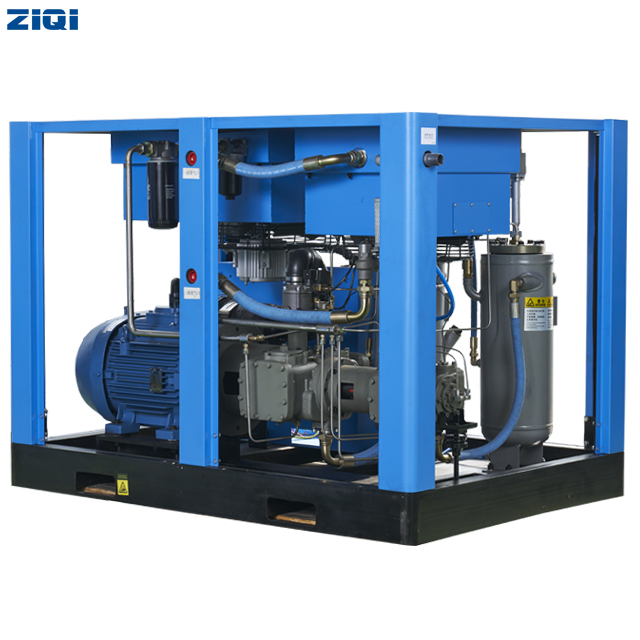
Using Two-Stage Screw Compression with a German-technology
airend and Permanent Magnet VSD motor, the GAH
delivers 16-30 bar continuously with no cooling breaks, no vibration, and
under 75 dB noise — quiet enough to install next to your laser cutting
workshop.
Compression
Core
⚙️
Two-Stage Screw Air End
Unlike piston boosters that hammer air in reciprocating strokes, the GAH
uses continuous rotary two-stage compression with intercooling.
Discharge temperature stays 30-40°C lower than single-stage designs —
extending oil life and airend
bearing life significantly.
-
Durability: Designed for 24/7 continuous load at
rated pressure
-
Efficiency: 15-20% lower specific power than
single-stage at 16+ bar
-
Service: 8,000+ hour maintenance intervals
Energy Core
⚡
PM VSD Motor
Permanent Magnet Variable Speed Drive motor (IE5 equivalent) directly
coupled to the airend. Adjusts speed in real-time to match your exact
air demand — no unloading waste, no idling energy loss.
-
Saving: 25-35% energy reduction vs. fixed-speed
piston systems
-
Stability: Constant pressure output ±0.1 bar
-
Start: Soft start — no current peak, no voltage
sag
💧
Ultra-Clean Air (<3ppm)
High-efficiency multi-stage oil separation ensures oil content below
3ppm. Protects expensive fiber laser lenses and PET molds. Pair with our
precision
filters for Class 1 or Class 0 purity.
📦
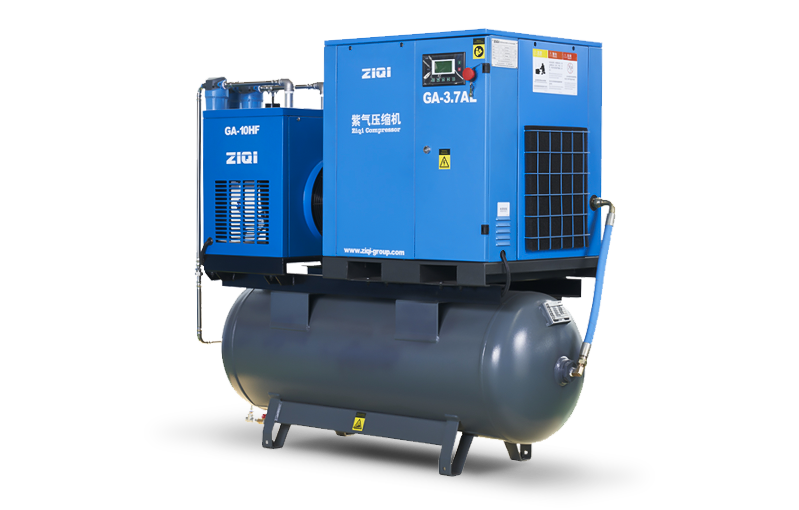
Integrated Skid Option
Compressor + tank + refrigerated
dryer on a single skid. Plug-and-play installation — connect
power and piping, start cutting in hours, not days.
🖥️
Smart PLC Control
Touch screen monitors pressure, temperature, and current in real time.
Maintenance reminders, fault history, and remote monitoring via
Modbus/RS485. Open architecture — no proprietary lock-in.
Primary
Application
Fiber Laser Cutting
Modern fiber lasers (1-30 kW) require high-pressure nitrogen assist gas
at 16-25 bar for clean, oxide-free cuts on stainless steel and aluminum.
The GAH provides continuous, stable pressure with oil content below 3ppm
— protecting your laser lens (replacement cost: $500-$2,000).
Typical setup: GAH-22 (22 kW) → Dryer → Filter Set →
Nitrogen Generator → Laser
Primary Application
PET Bottle Blowing
PET stretch blow molding needs 25-40 bar of clean, dry air. The GAH
delivers up to 30 bar continuously. For 30-40 bar applications, use a
GAH as the clean first stage paired with a single-stage booster —
eliminating the noise, vibration, and downtime of a piston-only system.
Typical setup: GAH-37 (37 kW, 30 bar) → After-cooler →
Storage Tank → Blow Mold Machine
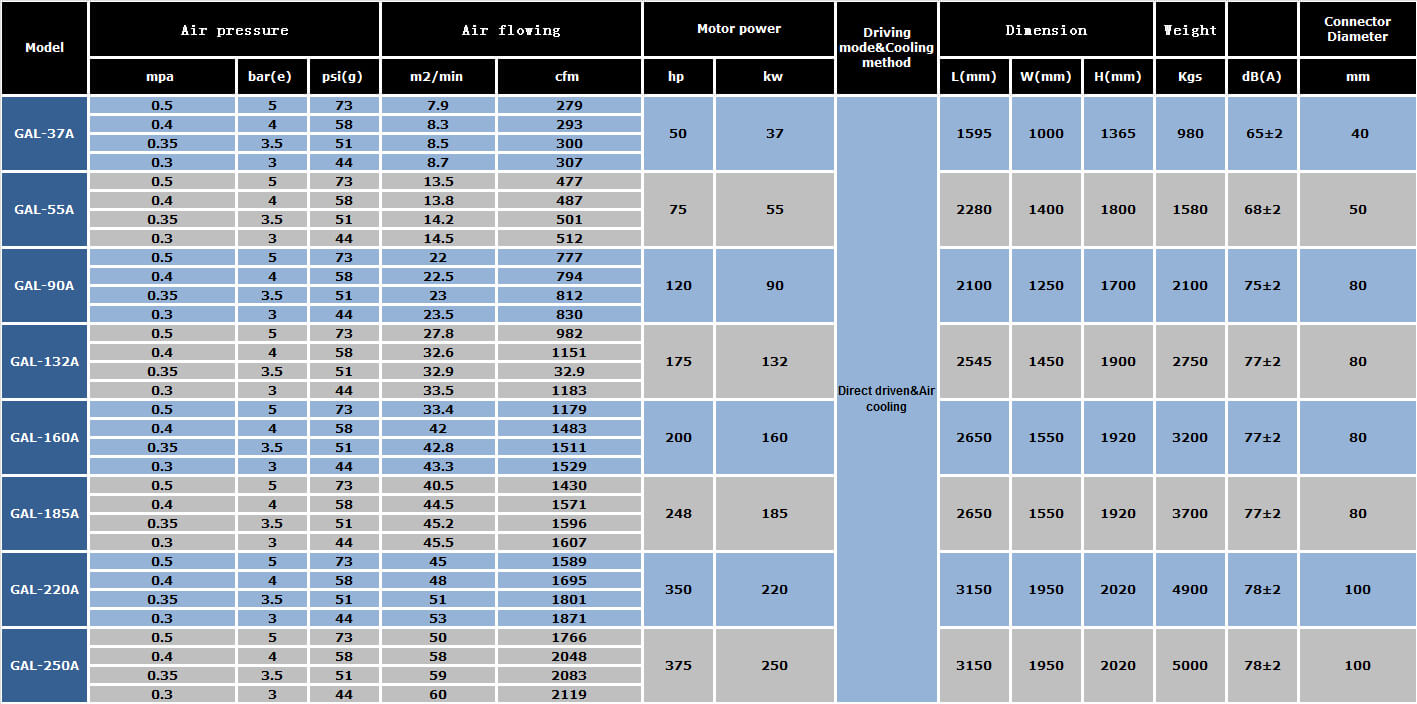
* Capacity is measured at rated discharge pressure. PM VSD allows stepless
adjustment from 30% to 100% load. Integrated skid (compressor + tank + dryer)
available for all models. Contact us for exact
configuration.
What pressure does a fiber laser cutting machine need?
Most fiber laser cutters need 16-25 bar depending on
material and thickness. Nitrogen-assist cutting of stainless steel and
aluminum typically requires 20-25 bar. Oxygen-assist cutting of mild
steel needs 10-16 bar. The air must be clean — oil content below 3ppm to
protect the expensive laser focusing lens.
Can a screw compressor replace a piston booster for high
pressure?
Yes. Two-stage screw compressors like the ZIQI GAH
deliver 16-30 bar continuously at 100% duty cycle. Piston boosters
overheat after 50-60% duty and need cooling breaks. Screw systems cost
more upfront but save 30-40% in combined energy and maintenance costs
over 5 years, typically paying back in 12-18 months.
What is the oil content of the ZIQI GAH compressor?
The GAH achieves less than 3ppm oil carryover through a
high-efficiency multi-stage separation system. For applications
requiring Class 0 oil-free air (pharmaceuticals, electronics), pair the
GAH with an activated carbon filter to reach 0.01ppm — far cheaper than
buying an oil-free compressor.
How much air does a PET bottle blowing machine need?
A typical PET stretch blow molding machine needs 25-40
bar at 2-4 m³/min depending on bottle size and production speed. For
25-30 bar applications, the ZIQI GAH-30 or GAH-37 can supply directly.
For 30-40 bar, use a GAH as the first stage paired with a compact
booster.
What size high pressure compressor do I need for laser
cutting?
For a single fiber laser up to 6 kW: GAH-15 or GAH-18
(1.5-2.2 m³/min at 16 bar). For 6-12 kW lasers or dual-head machines:
GAH-22 or GAH-30. For multi-machine workshops with 3+ lasers: GAH-37 or
consider parallel installation. Always add 20% safety margin for piping
pressure drops and future expansion.
How much energy can a PM VSD high pressure compressor
save?
Compared to fixed-speed piston boosters, a PM VSD screw
compressor saves 25-35% on electricity. For a 22 kW unit running 6,000
hours per year at $0.10/kWh, that equals $3,300-$4,600 annual savings —
typically paying back the price difference in 12-18 months.
How noisy is a high pressure screw compressor compared to
a piston?
The ZIQI GAH operates below 75 dB(A) — comparable to
normal office conversation. Piston boosters typically exceed 85 dB(A),
requiring hearing protection for workers within 2 meters. The 10 dB
difference means the piston sounds roughly twice as loud to the human
ear.
What is the difference between single-stage and two-stage
high pressure compression?
Single-stage compresses air from atmospheric to final
pressure in one step — above 16 bar this generates extreme heat
(200°C+), destroying lubricant and reducing airend life. Two-stage
compresses in two steps with intercooling between stages, keeping
discharge temperature 30-40°C lower. This improves efficiency 15-20% and
dramatically extends component life.